

Planet
Building for a sustainable future
At Oracle, we’re committed to building a more sustainable future and empowering our employees and customers to do the same.
A message from our Chief Sustainability Officer

At Oracle, our commitment to operating responsibly is central to our role as a global technology leader. As we accelerate innovation for our customers, we remain focused on driving measurable progress—not only within our operations, but across our industry and global value chains. In this report, we highlight meaningful progress against our environmental goals, introduce new goals that reflect rising customer and stakeholder expectations, and outline practical, forward-looking strategies to address the challenges ahead.
As cloud computing and artificial intelligence continue to transform the global economy, Oracle is investing in next-generation data centers and resilient digital infrastructure to power innovation worldwide. The recent surge in demand for AI-driven applications is reshaping the data landscape and accelerating the pace of technological advancement.
We recognize that this rapid growth brings heightened expectations and new responsibilities. As data center infrastructure expands globally, important questions are being raised about energy use, water stewardship, and community impact. At Oracle, we are committed to responsible growth that supports our customers and delivers positive impact to the communities where we operate.
We’re proud that our growth has been matched with real advances in operational efficiency and environmental performance. We’ve hit key milestones, including matching our annual electricity use with 100% renewable energy use across our operations through 2025 and achieving tangible reductions in water use, landfill waste, and greenhouse gas emissions. These achievements demonstrate that secure and resilient digital infrastructure can be built and operated with efficiency and responsibility at its core.
Looking ahead, we are setting a new goal to power our next-generation, high-performance cloud infrastructure. We recognize that Oracle is not the same company it was just a few years ago. As our business evolves with the rapidly growing demand for the cloud and AI, so too must our strategy. We are committed to maintain 100% carbon-free electricity for our offices and public cloud offerings. Additionally, we are setting a new goal to achieve 100% carbon free electricity for Oracle Custom AI Data Centers by 2035, including our large, custom AI clusters built for a single customer. This timeframe allows us to invest in future-ready clean energy solutions that can scale with the evolving demands of our most innovative offerings, ensuring we maintain the right balance between growth, efficiency, and resilience. We’ve also set new environmental goals focused on reducing water risk and landfill waste across our value chain, and we remain engaged in biodiversity preservation globally.
We are also focused on helping our customers and partners accelerate their own progress. Whether through advanced reporting tools or cloud-based solutions, we empower organizations to better understand and manage their environmental footprint. We see tremendous potential for AI not only to deliver business value, but also to enable new environmental solutions. For example, we’re harnessing AI to support Oracle’s climate change analytics service, FloodSENS flood modeling developed in partnership with NVIDIA, and Oracle Utilities’ grid mapping solution, which helps detect power line faults to reduce wildfire risk. As our cloud and AI capabilities rapidly scale, so too does our ambition to set a new standard for responsible growth, guided by transparency, pragmatism, and collaboration. We thank our customers, employees, and partners for joining us on this journey. Together, we are building digital infrastructure that is as resilient and responsible as it is innovative.
Sincerely,
Scott Twaddle, SVP, OCI and Chief Sustainability Officer
Our commitment
We take a holistic approach to sustainability, setting goals that address key environmental topics throughout our operations, supply chain, and the communities where we operate. We are proud to have reached milestones such as reducing landfill waste and water use and powering our offices and public cloud data centers with 100% carbon-free electricity.
We remain committed to achieving net zero emissions by 2050 and halving emissions by 2030 relative to a 2020 baseline. To build on our progress, we’ve set new interim goals to drive greater impact and accountability across our business.
Sustainability goals
-

20%reduction of carbon emissions per megawatt of IT capacity by 2030, relative to a 2020 baseline
-

100%carbon-free electricity for our Oracle Custom AI Data Centers by 2035
-

50%reduction of water use in water-stressed regions by 2035, relative to a 2025 baseline
-

90%diversion or avoidance of landfill waste by 2035
Operations
As our business grows, we continually refine how we manage our environmental impacts. Our initiatives focus on climate action, waste reduction and circularity, and the responsible stewardship of natural resources such as water, air, and biodiversity. We approach these efforts holistically, emphasizing accountability and transparent reporting of challenges, opportunities, and progress.

Climate and clean air
We have set science-aligned emissions reduction targets, recognized by the Exponential Roadmap Initiative, an accredited partner of the UN Race to Zero campaign. We’re committed to achieving net zero emissions across our value chain by 2050, against a 2020 baseline. For Oracle, “net-zero” means reducing Scope 1, 2, and 3 emissions by at least 90%, and neutralizing any remaining emissions with verified, high-quality removals.
We rigorously track and publicly report our progress annually, with third-party assurance in alignment with the Greenhouse Gas Protocol, as detailed in our Environmental and Social Impact Datasheet.
Waste reduction and circularity
We view waste reduction and circularity as essential to building a sustainable business. As we grow and evolve, our responsibility to use resources efficiently increases. Our waste strategy emphasizes innovation, efficiency, and transparency across all operations—including offices, data centers, manufacturing, product design, and end-of-life hardware. By embedding circularity throughout our value chain, we maximize resource value, reduce our environmental impact and help drive sustainable practices across our industry.
Water and biodiversity
Water and healthy ecosystems are essential to both Oracle’s operations and life on earth. Climate change and human activity increasingly threaten clean water access and biodiversity. We are committed to minimizing our impact—especially in water-scarce and ecologically sensitive regions—by continually pursuing balanced, sustainable approaches to energy and water use while protecting natural habitats locally and globally.
Risk management and governance
When it comes to environmental governance, we’re proactive, transparent, and data-driven. Our chief sustainability officer oversees our sustainability strategy and sets the strategic direction for the company to enable thousands of customers to become more sustainable using Oracle solutions.
Environmental Steering Committee
Launched in 2008, the Environmental Steering Committee (ESC) is chaired by the Chief Sustainability Officer and is comprised of senior directors and executives across several Oracle lines of business (LOBs), including finance, legal, procurement, and operations. The committee is responsible for the implementation and oversight of our environmental policy. Representatives of the committee provide regular updates and reports to the Oracle Board of Directors. Members of the ESC define strategy, monitor progress against our goals, and act on the front line in addressing climate-related issues across the company.

Risk management and resiliency
Oracle takes a comprehensive approach to address environmental risks and opportunities. We use a company-wide double materiality assessment (DMA) to evaluate environmental impacts, risks and opportunities across operations and our value chain. We also leverage line of business-specific risk identification and assessment processes, such as Oracle Cloud Infrastructure’s Emerging Risk Program, which routinely assesses and prioritizes new risks to our cloud operations, using data analysis and cross-functional team input. We monitor supplier environmental performance to identify potential value chain risks through the Responsible Business Alliance (RBA) tools and annual sustainability disclosures. We integrate material findings with the company-wide Enterprise Risk Management (ERM) and Resilience and Crisis Management (RCM) programs, embedding climate considerations in strategic planning, compliance, and operational resilience, while promoting innovation and a proactive culture of risk awareness and preparedness.

Transparency
Our response to the annual CDP climate change questionnaire contains detailed information about our climate change strategy, governance, and management of climate-related risks and opportunities. This, and other key disclosures, reports, and datasheets, can be found on the Practices page of this report.

Supply chain
We know that our purchasing decisions can have a significant social and environmental impact. Our Sustainable Procurement Statement (PDF) affirms our ambition to incorporate sustainability into our procurement processes.
-
100%of our key tier 1 and tier 2 suppliers have an environmental program in place as of FY25
-
100%of our key tier 1 and tier 2 suppliers have emission reduction targets in place as of FY25
-
82Responsible Business Alliance audits conducted in FY25
How we drive a sustainable supply chain
Strategic supplier engagement
We engage with indirect and direct suppliers to report data on their carbon, water, and waste footprints, and we work with our key suppliers to enable alignment and identify new opportunities to reduce our environmental impact.
Educating suppliers
We educate our suppliers about our goals and expectations as we transition to a low-carbon economy as part of our net-zero goal.
Assessing and minimizing risk
We use standard platforms to better understand potential risk within our supply chain and improve procurement practices.
Monitoring and compliance
We manage, monitor, and audit our direct hardware supply chain internationally as part of our Responsible Business Alliance (RBA) membership. In fiscal year 2025, 82 audits based on the RBA Code of Conduct were completed at direct hardware supplier factory locations to ensure compliance.
Green logistics and eco-friendly transportation
We work closely with our logistics partners to minimize shipments, maximize consolidation, and select sustainable modes of transportation, including lower-emission options such as bio-liquefied natural gas.
Eco-friendly travel
We collaborate with our travel partners to reduce emissions from flights, encourage the use of public transportation, and promote lodging venues that integrate sustainability into their operations.
Customer solutions
We are uniquely positioned to help customers reduce their environmental footprint. Our clean cloud provides a sustainable alternative to traditional on-premises infrastructure, and our broad technology suite enables customers to measure, manage, and report on environmental impacts and integrate sustainability into their business.
Clean Cloud
Worldwide, we’re embedding sustainability across our enterprise and delivering innovative cloud technology to accelerate meaningful change for our customers and our planet. Oracle Cloud Infrastructure (OCI) is a high performance clean cloud solution that runs on carbon-free electricity and IT infrastructure that we continuously optimize for circularity.
Attributes of our clean cloud
Carbon-free electricity
Our multifaceted energy strategy includes a range of contract mechanisms and technologies, including renewable power purchase agreements (both direct and virtual), onsite renewable and carbon-free generation, use of renewable energy credits, and diversification with other clean energy sources. We also work closely with our colocation suppliers to improve data transparency and drive renewable energy adoption. These considerations are part of our selection process for new suppliers and factor into our engagements with existing suppliers.

Efficient and dynamic
OCI offers a more sustainable alternative for companies looking to minimize their environmental impact by providing a high-density computing environment that yields enormous economies of scale and optimizes energy usage. OCI provides an elastic computing platform that can grow dynamically with an organization, reducing the need to build excess capacity to meet future demand. Our data centers follow best practices for cooling and energy management.

Circular
We apply a lifecycle approach to OCI server and hardware products, beginning with design assessments for circularity attributes like dematerialization, serviceability, and recyclability. Advanced energy management and cooling technologies help extend product longevity in operation. To reduce waste, we prioritize remanufacturing, partner with third-party recyclers, and responsibly dispose of only what cannot be repurposed.

Product sustainability
In addition to the benefits of the clean cloud, our hardware customers can extend the life of their equipment and reduce waste through our many take-back programs which harvest, test, and offer remanufactured spare parts to our hardware customers.
We empower our customers with advanced climate tools to support emissions allocation and visibility, including the OCI Customer Carbon Emissions tool, enabling organizations to measure, report, and manage the carbon footprint of their Oracle Cloud workloads from their console. We’ve also launched sustainability features in Oracle Fusion Cloud EPM, as well as Oracle Fusion Cloud Sustainability and a climate change analytics service, all of which support customers’ ability to measure, analyze, and report emissions.
-
99.4%of all processed hardware recycled or reused
-
7.5Mpounds of retired customer hardware assets collected for recycling or reuse
-
100%of technology recycling partners ISO 14001 certified
Customer success gallery
Our customers are using Oracle’s data-driven technology solutions to accelerate meaningful solutions across industries. From promoting ethical supply chain transparency for minerals sourcing to using machine learning to realize larger crop yields, our offerings are advancing efforts to address climate change and the world’s most pressing sustainability challenges.
OCI services help NIBIO improve sustainable forest management
The Norwegian forestry research organization is using Oracle Autonomous Database and AI on Oracle Cloud Infrastructure to better understand the forest value chain and improve long-term sustainability.
Keep Sea Blue tackles marine plastic pollution with Oracle Blockchain
Keep Sea Blue relies on Oracle Blockchain Platform to help it track the journey of plastic waste recovered from areas around the Mediterranean. Once plastic is collected, it’s tracked and traced as it moves to recycling facilities and is eventually remade into new packaging products.
SailGP lowers its carbon footprint with OCI
SailGP is striving to have all its race operations run on clean energy. The league relies on OCI to help it track energy use and to let technologists operate systems remotely so fewer people need to travel to competitions.
DigiFarm creates a sustainable future for agriculture and achieves 30% cost savings with OCI
After evaluating several vendors, Helset and his team selected OCI to develop DigiFarm’s precision agriculture platform because OCI’s bare metal graphic processor units (GPUs) are vital to the kind of machine learning he runs.

Communities
Environmental stewardship isn’t just a commitment—it’s a collaboration that unites our employees, partners, and communities. We give back through environmental philanthropy, hands-on volunteering, and investing in the communities that surround our offices and data centers. We’re proud to leverage our resources—financial, technological, and human—to foster thriving ecosystems and resilient communities, making a lasting difference together for people and the planet.


Oracle custom AI data centers: Investing in communities, powering the future
Oracle’s custom AI data centers are powering American leadership and transforming how communities can grow and thrive. By creating high-quality jobs, boosting local economies, partnering with educational institutions, and protecting natural resources, each campus is built to deliver long-term opportunity and prosperity for generations to come.
Oracle Giving
We know that caring for our planet is key to creating a healthy present and future for all. Through our philanthropy, we protect the land and water on which all life depends. We fund wildlife conservation, help advance ocean protection and research, invest in a zero-waste future, and sponsor environmental science education for young people.

Our environmental grants
30 years of gorilla conservation
For more than 30 years, we’ve been proud to support the Dian Fossey Gorilla Fund (DFGF) and its work to protect gorillas, their habitats, and the surrounding human communities. In fiscal year 2025, our grant provided on-the-ground protection for gorilla groups in Volcanoes National Park, 500 anti-poaching patrols, and community education programs reaching close to 30,000 people. And since 2014, Oracle Cloud has hosted all DFGF data—the world’s largest, most comprehensive longitudinal collection of data on any wild gorilla population.

Protecting the ocean’s wild places
In 2009, we began funding National Geographic’s Pristine Seas, a global project that works to establish marine reserves—areas free of extractive and damaging activities—where marine life thrives and produces benefits for local communities and the world. To date, the Pristine Seas team has conducted 44 expeditions that have helped inspire the creation of 28 marine protected areas, covering more than 6.6 million square kilometers. The expeditions deepen partnerships with local scientists, nongovernmental organizations, and government officials, building momentum for the future protection and management of these critical marine ecosystems.

Restoring California’s ancient forests
Since 2009, our support for Save the Redwoods League has helped restore 70,000 acres of degraded redwood forest in Redwood National and State Parks. The restoration interventions, including forest thinning and road removal, stimulate the growth of young trees, allow the forest to regain resilience against drought and fire, expand wildlife habitats, and improve waterway health. The project spans 30 years, revitalizing the redwood forest from Oregon to Big Sur, California, and partners with the Yurok and Tolowa Tribes—whose ancestral territory includes the entirety of both project watersheds—to achieve shared restoration objectives.

Connecting youth with nature
Our support of NatureBridge helps provide national park–based environmental science education to 30,000 K–12 students and teachers annually—inspiring environmental stewardship as well as self-discovery. Students spend seven hours in the field each day, learning scientific principles, conducting research, and participating in stewardship projects that benefit the local habitat. Each year, we provide scholarship support to more than 1,000 underserved students. We also support organizations such as Keep Austin Beautiful, a community-based initiative that helps beautify green spaces, clean waterways, and reduce waste. Our support enables the organization to lead beautification and restoration projects and deliver educational resources to the community.

Solving the waste crisis
Globally, an estimated 300,000 cetaceans—whales, dolphins, and porpoises—die every year from entanglement in ocean trash and fishing gear that’s largely made of plastic. Our grant to The Marine Mammal Center helps the organization respond to entangled whales, seals, and sea lions along the California coast, provides training and technical assistance to global stranding organizations around the world, and engages stakeholders and conducts research to prevent future entanglements and ship strikes. In Nigeria, we’re helping to drive social change and get plastic out of the environment through our support for Wecyclers. The organization enables low-income communities to capture value from waste through recycling. Since 2014, our grants have funded local kiosks for recycling and exchange. These increase collection capacity in densely populated areas, create jobs, reduce operational costs, and raise public awareness about recycling and environmental sustainability.

Oracle Volunteering
Earth is our home, and we all play a part in caring for it. Oracle Volunteers work year-round to restore native habitats, plant trees, sow seeds, remove plastic and debris from beaches and waterways, maintain trails and preserves, and advance eco-friendly educational projects. They lead by example and inspire others to take action for our planet.
Our impact
Bringing eco-education to the classroom
In Santiago, Chile, Oracle Volunteers worked alongside Manos a la Tierra to teach students how to identify and map local waterfowl habitats in Ejido. They learned about the causes of environmental degradation, the importance of biodiversity, and the impact of targeted interventions such as providing nesting material, shelter, and food. In Banten, Indonesia, Oracle Volunteers joined Yayasan Pemimpin Anak Bangsa to teach waste management design in classrooms. Students used science, math, social, civic education, and even computing to create their program. Once home, they separate, reduce, reuse, and recycle their own waste, then measure the results all year long.

Illuminating lives with sustainable solutions
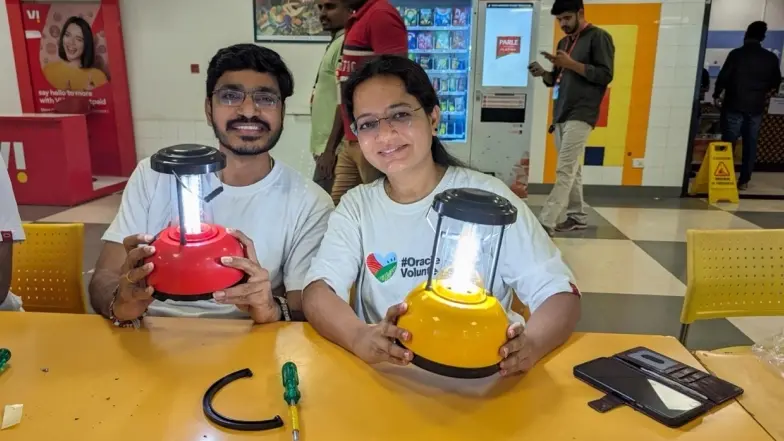
In Bangalore, India, Oracle Volunteers teamed up with Way of Life to build solar lamps for tribal communities in the Kabani and Yellapura forests. The lamps are eco-friendly and reduce the community's reliance on nonrenewable energy sources. But the benefits don’t end there: Children can study in the evenings by lamplight, medical clinics can stay open later, and the entire community benefits from enhanced safety and security after sundown.
Helping our pollinators survive and thrive
Working with the National Geographic Society, Oracle Volunteers across the United States built native plant gardens to help restore natural habitats for declining monarch butterfly populations. With 75% of the world's plant species dependent on pollinators, these efforts go a long way toward protecting biodiversity and promoting a healthy ecosystem. Through their work with iNaturalist, Oracle Volunteers participated in and led public education sessions about local flora and fauna and the importance of biodiversity to our climate, our economies, and our everyday lives.

Driving toward a zero-waste economy
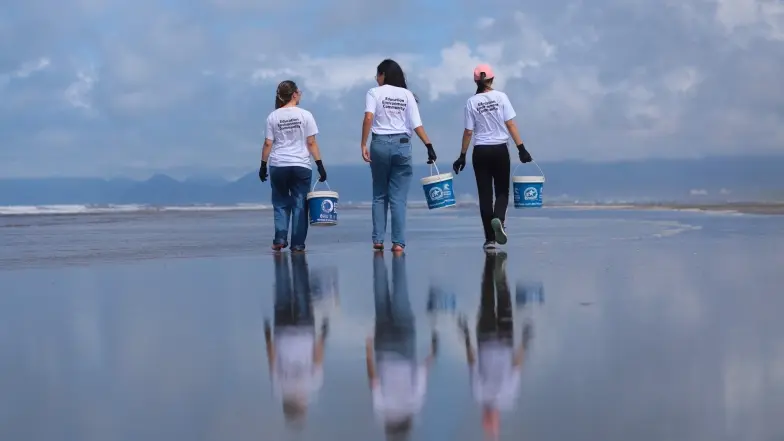
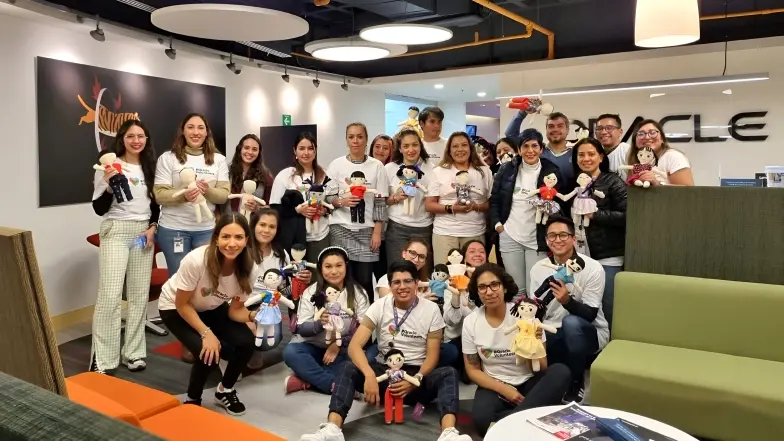
Across the globe, Oracle Volunteers mobilize to clean up coastlines, divert waste from landfills, and repurpose used items to promote a circular economy. In Mexico, they transformed old materials into new items—crafting dolls for underserved children with BRED Guadalajara, as well as toys, clothing, and more for those in need. In the United States, they protected watersheds by building storm drains and providing education about water pollution, and through their work with Keep Austin Beautiful, they cleaned up local creeks. And, globally, Oracle Volunteers spent more than 1,000 hours with Ocean Conservancy to remove trash, pollutants, and debris from our coastlines.

Learn more about our impact
Follow us on social media
Photo credits: Oracle Giving hero image: NatureBridge; Environmental grants: 1. Dian Fossey Gorilla Fund; 2. National Geographic Pristine Seas; 3. Save the Redwoods League; 4. NatureBridge; 5. The Marine Mammal Center.